Reducing the Environmental Impact of Laboratory Testing
Laboratory medicine is energy intensive, largely due to energy-consuming equipment and HVAC requirements, as well as transportation (e.g. courier) and waste production. Labs use approximately 10 times more energy and 4 times more water than office spaces, and use more energy per square foot than hospitals.
What Can Family Physicians Do?
Reduce unnecessary testing
Consider whether a laboratory test is necessary before ordering it. Choosing Wisely Canada provides recommendations for reducing unnecessary testing, including recommendations for Biochemistry and Pathology.
Consider the environmental impact of tests
The environmental impact of laboratory testing varies depending on the test and the resources required for phlebotomy, sample collection, processing, and analysis. The chart below, from a 2023 paper, illustrates the greenhouse gas emissions associated with different aspects of laboratory testing.
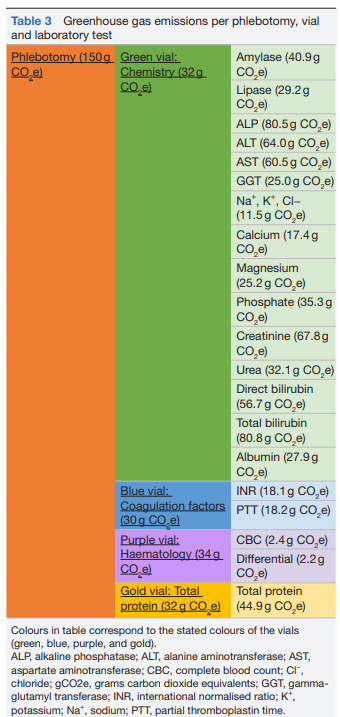
Considering the environmental impact of laboratory medicine alongside clinical appropriateness can help reduce unnecessary resource use while maintaining high-quality patient care.